
How to Test Tool Performance Before Big Jobs
Before beginning a major flooring project, testing your tools beforehand is one of the best ways to ensure efficiency and prevent costly errors. Grinding and polishing extensive surfaces of concrete, terrazzo, or stone requires not only the proper equipment but also confidence in how well it performs. Careful assessment helps contractors save time, minimize machine wear, and achieve consistent outcomes.
The initial step is to carry out a small-scale test on a sample section of the floor. This enables you to observe how the surface reacts to the selected tool and verify that the bond and grit choices are suitable. For instance, a SASE metal diamond tool should be tested for grinding speed, smoothness, and heat resistance before using it throughout the entire site. Starting with a small area allows you to quickly determine if any adjustments are necessary.
Another important aspect of testing is tracking tool wear. A tool might seem effective initially but can lose efficiency rapidly if it doesn’t match the floor’s hardness. Conducting a short trial with a metal bond trapezoid grinding tool helps assess its durability and ensures it won’t glaze or wear out too soon. This process also provides guidance on whether a softer or harder bond is needed for the best performance.
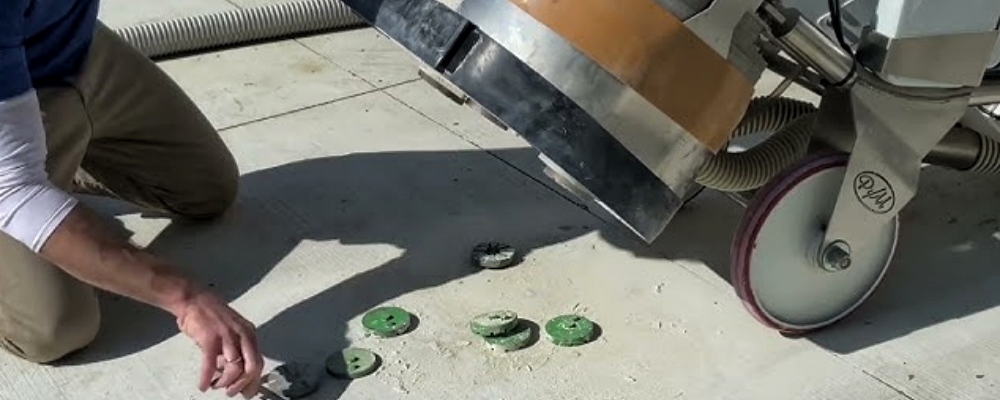
Lastly, include a compatibility check in your pre-job tests. Even minor differences in mounting interface, pad thickness, segment layout, or recommended RPM can change how a tool runs on your grinder. Test concrete resin polishing pads on a small patch using the intended backer and machine speed, and watch for vibration, excessive heat, poor dust pickup, or current draw—clear signs of mismatch. Then confirm the surface result (no swirl marks, uniform gloss). If chatter or overheating occurs, adjust backer, speed, or pad model before proceeding to the full project.
Taking the time to test tool performance before large-scale jobs is a practical strategy for professionals in the flooring industry. By confirming the right combination of tool type, bond, and machine compatibility in advance, contractors can improve efficiency, extend tool life, and deliver a polished surface that meets client expectations.
- Newsletter
- Join our community
- Company Info
- Feedback Customer Reviews About Us Contact Us Blog Help Center
- User Center
- Forget Password My Orders Tracking Order My Account Register
- Payment & Shipping
- Customs & Taxes Locations We Ship To Shipping Methods Payment Methods
- Company Policies
- Return Policy Privacy Policy Terms of Use Infringement Policy