
How to Use Diamond Grinding Tools Effectively
Understanding the Concrete Surface Before Grinding
Using diamond grinding tools effectively always starts with understanding the condition of the concrete surface. Different floors can vary significantly in hardness, density, and surface condition depending on how they were poured and finished. Hard-troweled or highly dense concrete, for example, behaves very differently from softer or more porous slabs. A proper surface evaluation helps determine how aggressively the tools should cut and whether the floor will provide enough abrasion for stable performance.
Matching Bond Hardness to Concrete Conditions
Metal bond diamond grinding tools, such as Lavina diamond grinding heads and SASE diamond grinding tools, are typically used for early-stage grinding and surface correction. Choosing the correct bond hardness is critical, as it directly affects grinding efficiency and tool life. In general, softer concrete requires a harder bond to maintain stability, while harder concrete needs a softer bond so that the tool can wear properly and continuously expose fresh diamond particles. When the bond is not correctly matched, the tool may either wear too quickly or fail to self-sharpen, both of which reduce grinding efficiency and lead to inconsistent results.
Controlling Machine Pressure and Movement
Even with the correct tool selection, machine handling plays a major role in grinding performance. Downward pressure, walking speed, and grinder stability all affect how the diamonds engage with the surface. If the machine moves too fast, the tool may not stay in proper contact with the concrete, reducing grinding effectiveness. On the other hand, excessive pressure can create uneven wear and shorten tool life. Consistent movement and balanced control help maintain an even scratch pattern across the entire floor.
Managing Dust and Preventing Performance Loss
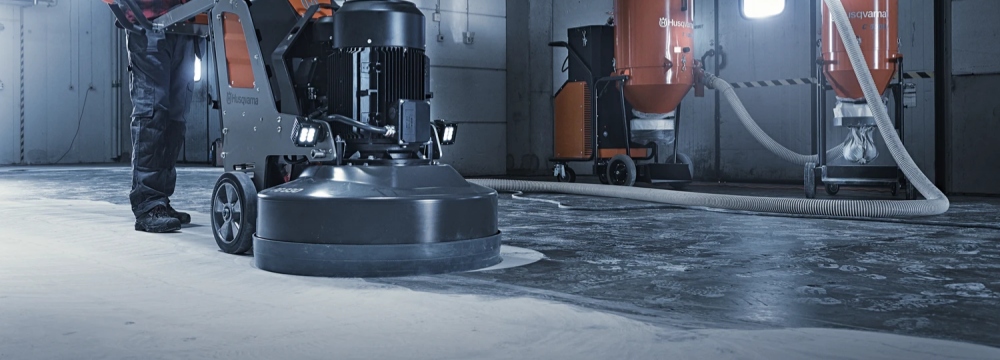
Dust extraction is often overlooked, but it has a direct impact on grinding efficiency. When dust is not properly removed, it can form a layer between the tool and the concrete surface, reducing cutting contact. This leads to heat buildup and reduced tool performance over time. Using an effective vacuum system helps maintain clean contact between the diamond segments and the floor, allowing the tools to perform at their intended cutting capacity.
Following a Step-by-Step Grinding Process
Effective grinding is always a progressive process rather than a single pass operation. Starting with the correct grit ensures that surface irregularities are removed efficiently without creating deep scratches that are difficult to refine later. Each stage should build on the previous one, gradually improving flatness and surface consistency. When all factors—surface condition, bond selection, machine control, and dust management—work together, diamond grinding tools deliver stable performance and high-quality results on a wide range of concrete floors.
- Newsletter
- Join our community
- Company Info
- Feedback Customer Reviews About Us Contact Us Blog Help Center
- User Center
- Forget Password My Orders Tracking Order My Account Register
- Payment & Shipping
- Customs & Taxes Locations We Ship To Shipping Methods Payment Methods
- Company Policies
- Return Policy Privacy Policy Terms of Use Infringement Policy