
Addressing Challenging Surface Conditions in Concrete Floor Grinding
Concrete floor grinding rarely takes place under perfect conditions. Many projects involve surfaces that are uneven, contaminated, or vary in hardness, all of which can quickly impact both efficiency and the quality of the final outcome. Before beginning any grinding, it’s crucial to thoroughly assess the floor. Knowing what you’re dealing with—such as soft spots, old coatings, or patched areas—helps in choosing the appropriate method and prevents unnecessary rework later on.
One of the most frequent challenges is the variation in concrete hardness. It’s common for different parts of the same floor to react differently to the grinder. Some sections may grind too quickly, while others resist abrasion, resulting in an uneven scratch pattern. In these cases, using concrete floor metal grinding tools designed for both hard and soft concrete helps achieve a more controlled and consistent cutting process. Adjusting the bond type and grit based on immediate feedback from the floor often works better than sticking to a fixed setup.
Coatings and surface contaminants add another layer of complexity. Substances like epoxy, glue, or paint can hinder grinding, especially if they smear instead of breaking off cleanly. Attempting to grind through these layers with standard tools usually slows progress and causes increased tool wear. For thicker buildups, employing PCD coating removal tools designed for heavy epoxy and glue enables contractors to remove most of the material first, resulting in a cleaner surface for the next grinding steps.
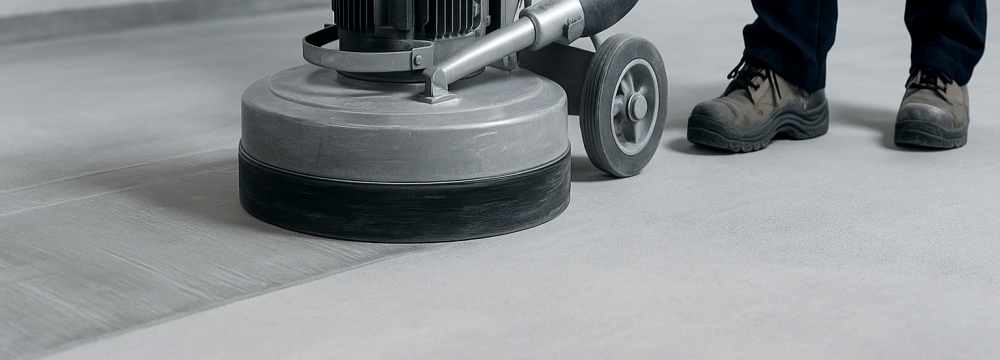
Surface irregularities, such as waves or poorly patched areas, call for a more careful approach. Applying too much pressure in these spots can make the surface harder to fix and may create deeper inconsistencies. A better method is to work in gradual passes, concentrating on leveling the floor before proceeding. After the surface is more even, diamond hybrid polishing pads for concrete surface transitions can be used to smooth the scratch pattern and prepare the floor for polishing or coating.
Handling difficult surface conditions relies less on force and more on control. Every floor reacts differently, and successful grinding requires adapting both tools and techniques as conditions evolve. By choosing the right tools at each stage and following a systematic process, even challenging surfaces can be finished to a consistent and workable standard.
- Newsletter
- Join our community
- Company Info
- Feedback Customer Reviews About Us Contact Us Blog Help Center
- User Center
- Forget Password My Orders Tracking Order My Account Register
- Payment & Shipping
- Customs & Taxes Locations We Ship To Shipping Methods Payment Methods
- Company Policies
- Return Policy Privacy Policy Terms of Use Infringement Policy