
Common Challenges When Preparing Concrete Floors in Renovation Projects
Preparing a concrete floor for renovation is often more complicated than it looks. Once old flooring is removed, the exposed slab may reveal layers of adhesive, coating residue, uneven patches, cracks, or areas of deteriorated concrete. These conditions are not always visible before demolition, and they can affect how the new flooring system performs. A floor that appears clean at first glance may still have surface contamination or weak areas that need attention before installation begins. This is why inspecting the actual condition of the concrete is an important part of any renovation project.
One common challenge is removing old flooring materials without damaging the concrete underneath. Tile adhesive, carpet glue, epoxy coatings, and other bonded residues can be difficult to remove, especially when several layers have built up over time. Scraping may be sufficient for loose material, but firmly bonded coatings or thick adhesive deposits often require mechanical removal. Depending on the material, coating removal tools may be suitable for removing stubborn coatings, while other residues may require different methods. The choice of equipment and tooling depends on the material being removed and how strongly it is attached to the slab. Using an unsuitable grinding tool can result in slow removal, excessive wear, or unnecessary damage to the concrete surface.
Uneven surfaces and existing concrete damage create another set of problems. Raised areas, old repair patches, cracks, and surface spalling may become apparent only after the previous floor covering has been removed. Grinding can reduce high spots and surface irregularities, but deeper cracks, loose concrete, and damaged sections may require separate repair work. Metal bond diamond grinding tools are commonly used for concrete grinding and surface preparation, with the appropriate bond and segment design depending on the floor condition. It is also important to distinguish between surface imperfections and structural issues. Grinding alone cannot correct every type of floor damage, and significant cracking or movement may need further assessment before the renovation continues.
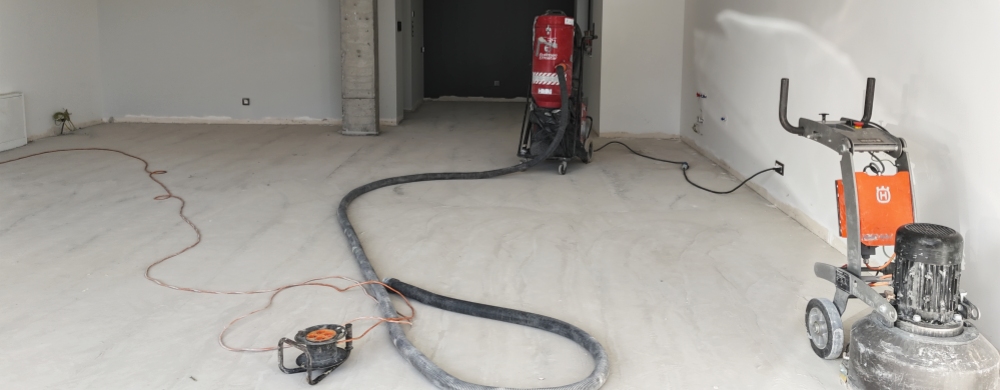
Moisture is another issue that can easily be overlooked during floor preparation. Concrete can retain moisture from the ground, previous cleaning, plumbing leaks, or other sources. Installing a moisture-sensitive flooring system without checking the slab can lead to adhesive failure, blistering, coating problems, or other installation defects. Surface appearance is not a reliable indication of moisture condition. Contractors should use the moisture testing method required by the flooring manufacturer and confirm that the results fall within the system's acceptable limits before proceeding.
Dust control and job-site conditions also affect the preparation process. Mechanical grinding and coating removal can generate substantial amounts of fine dust, while wet grinding produces slurry that needs to be collected and managed. Renovation projects in occupied buildings require additional planning to control dust spreading into nearby areas and minimize disruption to people using the space. Effective dust extraction, appropriate respiratory protection, and proper slurry handling help control these risks. The preparation method should account for the building environment as well as the condition of the concrete itself.
No two renovation floors are exactly alike. Old flooring materials, previous repairs, moisture conditions, and the quality of the original concrete can all influence the work required. Rather than following the same preparation method on every project, contractors need to assess the slab after the existing floor covering is removed and address each problem according to its cause. Selecting suitable diamond grinding tools for concrete is part of this process, but the final preparation must also meet the new flooring system's requirements for cleanliness, surface profile, strength, and moisture condition. Identifying potential problems early can help avoid installation failures, unnecessary rework, and delays later in the renovation.
- Newsletter
- Join our community
- Company Info
- Feedback Customer Reviews About Us Contact Us Blog Help Center
- User Center
- Forget Password My Orders Tracking Order My Account Register
- Payment & Shipping
- Customs & Taxes Locations We Ship To Shipping Methods Payment Methods
- Company Policies
- Return Policy Privacy Policy Terms of Use Infringement Policy