
Removing Residual Thinset After Ceramic Tile Demolition
After ceramic tile is removed, the floor is rarely ready for the next installation. Thinset mortar often remains bonded to the concrete slab, leaving behind rough patches, ridges, and uneven areas where the tiles were previously attached. Even when most of the mortar comes off with the tile, the remaining material can interfere with the installation of new flooring. Before starting the next project, the concrete needs to be inspected and the residual thinset removed to a condition suitable for the new floor system.
The best removal method depends on how much mortar remains and how firmly it is attached. Loose pieces and small ridges can often be removed with a floor scraper or chipping tool, while thicker, hardened deposits may require mechanical removal. For localized areas and stubborn mortar deposits, suitable diamond grinding wheels can be used with compatible grinding equipment to remove hardened residue and reduce raised spots. For larger areas, a compatible floor grinder fitted with suitable diamond tools can help remove stubborn thinset and level high spots. However, the goal is not necessarily to remove concrete along with every trace of mortar. Excessive grinding can damage or unnecessarily lower the slab, so the removal process should be controlled according to the condition of the floor.
Diamond tooling selection also makes a difference. Metal bond diamond grinding tools are commonly used to remove thinset residue and grind the exposed concrete, but the appropriate bond and segment design depend on the mortar, concrete hardness, and amount of material remaining. A tool that cuts well on one slab may wear differently on another. Contractors should also consider the grinder's weight, operating speed, and tooling compatibility. Testing a small section first can help determine whether the selected tool removes the residue effectively without creating unnecessary surface damage.
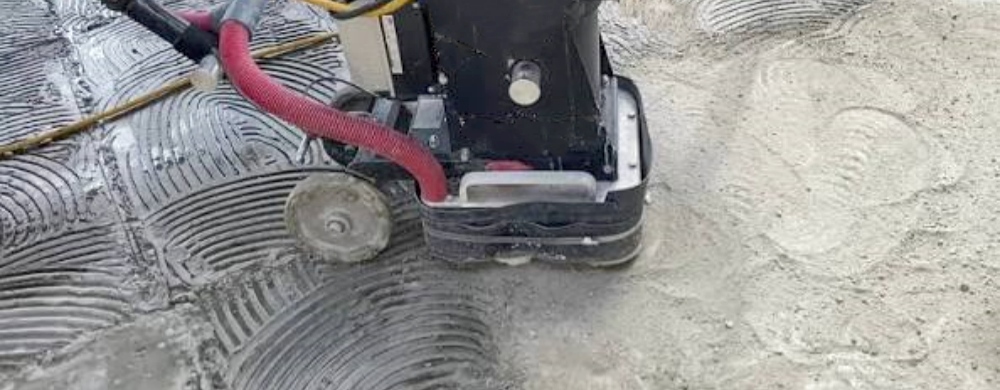
Dust control is another important part of thinset removal. Mechanical grinding can generate significant amounts of fine dust, particularly when working on large concrete floors. Dry grinding should be carried out with an effective dust extraction system and suitable respiratory protection. Wet grinding can help suppress airborne dust, but it produces slurry that must be collected and disposed of properly. Before choosing either method, contractors should confirm that both the grinding equipment and diamond tools are approved for the intended wet or dry application. They should also consider the potential presence of hazardous materials in older flooring assemblies before demolition or grinding begins.
Once the remaining thinset has been removed, the slab should be checked for cracks, damaged areas, unevenness, and any remaining adhesive or contamination. Vacuuming is necessary to remove loose dust and debris, while additional cleaning or repairs may be required depending on the condition of the substrate. The preparation standard will also depend on the new flooring system: some installations require a relatively smooth surface, while others need a specified concrete surface profile for proper bonding. Following the flooring manufacturer's preparation requirements helps ensure that the slab is suitable for the next installation and reduces the risk of problems caused by leftover mortar or an improperly prepared surface.
- Newsletter
- Join our community
- Company Info
- Feedback Customer Reviews About Us Contact Us Blog Help Center
- User Center
- Forget Password My Orders Tracking Order My Account Register
- Payment & Shipping
- Customs & Taxes Locations We Ship To Shipping Methods Payment Methods
- Company Policies
- Return Policy Privacy Policy Terms of Use Infringement Policy