
Coating Removal vs Surface Grinding: Which Process Comes First?
When preparing a concrete floor for a new coating, polishing, or another surface treatment, it is important to understand the difference between coating removal and surface grinding. Although both processes involve mechanical equipment, they serve different purposes. Coating removal focuses on taking off existing materials such as epoxy, paint, adhesives, and other bonded coatings. Surface grinding, on the other hand, works directly on the concrete to remove surface imperfections, residual materials, and weak surface layers while creating the required surface profile. When an existing coating is present, coating removal generally comes first, followed by surface grinding if the exposed concrete needs further preparation.
The condition and thickness of the existing coating help determine the most suitable removal method. Thin paint, sealers, and light adhesive residues may be removed through appropriate grinding methods, while thick epoxy coatings, stubborn adhesives, and other strongly bonded materials may require more aggressive removal equipment. PCD coating removal tool is commonly used for removing many types of coatings because its cutting edges can shear through bonded materials rather than simply abrading them. However, tool selection should depend on the coating's thickness, hardness, adhesion, and the condition of the concrete underneath. Using conventional metal bond diamond segments on thick or sticky coatings can cause material buildup on the segments and reduce cutting efficiency.
Once the main coating layer has been removed, the exposed concrete should be inspected before moving on to the next stage. In many cases, thin adhesive residues, coating fragments, or uneven areas remain on the surface. These need to be addressed before applying a new coating or continuing with a polishing process. Surface grinding with suitable metal diamond grinding tools like Redi lock metal grinding tools can remove remaining material, refine the concrete surface, and help create a more uniform profile. The appropriate grit and bond hardness depend on the concrete condition, including its hardness and aggregate characteristics. The goal is not simply to make the floor look smooth, but to leave the concrete clean, sound, and suitable for the next treatment.
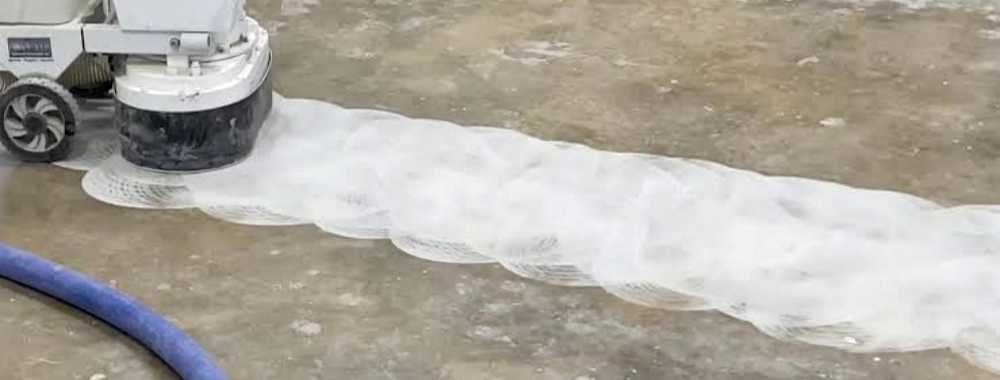
The required surface profile is another important factor when deciding how much grinding is necessary. A floor receiving a new epoxy or resinous coating may need a specific degree of surface texture to support proper mechanical adhesion. A floor being prepared for concrete polishing has different requirements because the objective is to progressively refine the concrete and develop the desired finish. Grinding too aggressively can remove more concrete than necessary, while insufficient preparation may leave weak surface material or an unsuitable profile. Contractors should follow the coating or treatment manufacturer's surface preparation requirements, including the specified Concrete Surface Profile (CSP), rather than relying on appearance alone.
It is also important to consider site conditions before starting either process. Oil, grease, and other contaminants should be identified and properly removed before mechanical preparation, since grinding or blasting alone may spread contamination rather than eliminate it. Both coating removal and concrete grinding can generate airborne dust, including respirable crystalline silica, so suitable dust extraction, work practices, and protective measures are essential. The removal method should also be selected with care to avoid unnecessary damage to the concrete substrate. A test area can help contractors evaluate how the coating responds and whether the selected equipment is appropriate before proceeding across the entire floor.
Understanding the correct sequence helps prevent unnecessary work and improves the quality of concrete floor preparation. If an old coating is present, remove it first, inspect the exposed concrete, and then grind the surface as needed to achieve the required condition and profile. If the floor is already bare concrete, there may be no coating removal stage, and grinding can begin after inspection and cleaning. The key is to choose each process according to the actual floor condition and the requirements of the next application. Separating coating removal from surface grinding allows contractors to select more suitable tooling, control material removal, and prepare a more reliable surface for the work that follows.
- Newsletter
- Join our community
- Company Info
- Feedback Customer Reviews About Us Contact Us Blog Help Center
- User Center
- Forget Password My Orders Tracking Order My Account Register
- Payment & Shipping
- Customs & Taxes Locations We Ship To Shipping Methods Payment Methods
- Company Policies
- Return Policy Privacy Policy Terms of Use Infringement Policy