
How to Polish Commercial Concrete Floors
Polishing commercial concrete floors requires more than running a grinder over the surface until it develops a shine. The process starts with evaluating the existing floor and deciding what finish is achievable. Warehouses, retail stores, offices, and other commercial buildings may have different requirements for gloss, aggregate exposure, slip resistance, and ease of maintenance. Contractors should inspect the concrete for cracks, uneven areas, old coatings, adhesive residue, and previous repairs before choosing the grinding and polishing approach. These conditions affect both the work required and the appearance of the finished floor.
Once the floor has been assessed, the surface must be prepared for grinding. Existing coatings or adhesives may need to be removed with suitable tooling like PCD removal tools before the concrete can be refined. Any repairs should be completed using materials appropriate for the floor and the intended finish. Contractors then use metal bond floor Grinding Tools to remove surface irregularities and establish the required level of aggregate exposure. The correct bond and grit depend on the concrete’s hardness, aggregate characteristics, and condition. Dust extraction is also essential during dry grinding to control airborne dust and keep the working area manageable.
Grinding and polishing are carried out in stages, using progressively finer diamond abrasives. Each stage should refine the scratch pattern left by the previous one rather than simply make the floor appear smoother. Moving to a finer grit too early can leave scratches that remain visible in the finished surface. Contractors should inspect the floor under suitable lighting between stages, paying particular attention to edges, repaired sections, and areas where the concrete varies in hardness. Resin diamond polishing pad in suitable grit sequences can be used during later refinement, depending on the polishing system and the finish required. Consistent coverage across the floor is important because uneven grinding can lead to differences in gloss and surface appearance.
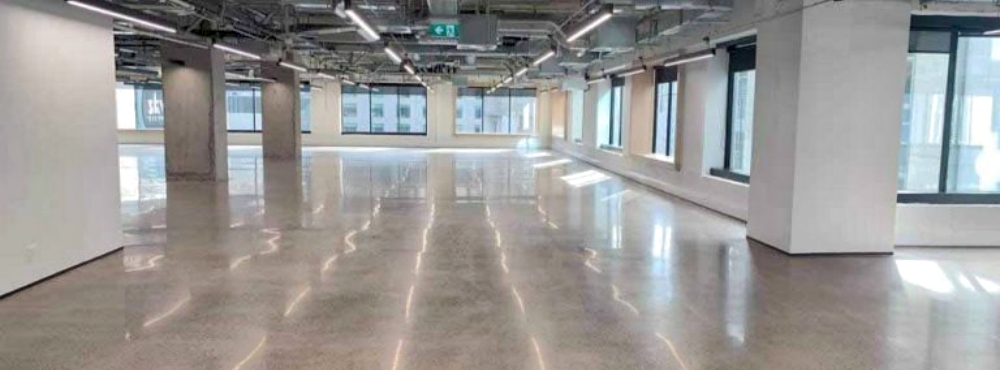
A concrete densifier is commonly applied during the process to help harden and densify the prepared concrete surface. The appropriate application stage and method depend on the densifier manufacturer’s instructions and the polishing system being used. Applying too much product, allowing residue to remain, or failing to prepare the surface properly can affect the final result. After the required grinding and densification stages, finer abrasives are used to develop the specified finish. For some systems, resin bond diamond polishing pads are suitable for later polishing stages. The number of stages and final grit depend on the desired appearance and the condition of the concrete; not every commercial floor needs a high-gloss finish.
After polishing, the floor should be cleaned thoroughly to remove remaining dust or residue and then inspected for scratches, uneven gloss, and visible defects. Commercial spaces may require different finishing choices depending on foot traffic, cleaning routines, lighting, and the intended use of the area. A polished surface should not automatically be assumed to be slip-resistant under every condition, particularly when wet or contaminated, so the finish should suit the building’s safety requirements. Establishing a suitable maintenance routine, using compatible cleaning products, and promptly addressing spills can help preserve the floor’s appearance. A well-planned polishing process takes the existing concrete, the required finish, and the building’s daily use into account at every stage.
- Newsletter
- Join our community
- Company Info
- Feedback Customer Reviews About Us Contact Us Blog Help Center
- User Center
- Forget Password My Orders Tracking Order My Account Register
- Payment & Shipping
- Customs & Taxes Locations We Ship To Shipping Methods Payment Methods
- Company Policies
- Return Policy Privacy Policy Terms of Use Infringement Policy