What Is the Right Bond Type for Concrete Grinding?
Choosing the right bond type is essential for getting effective performance from metal bond diamond grinding tools. The bond holds the diamond particles in place and wears away as the tool grinds the concrete, exposing fresh diamonds to continue cutting. If the bond wears too slowly, the diamonds may become dull without being exposed effectively, and the tool can start glazing or rubbing against the floor. If it wears too quickly, the segments may lose material faster than necessary. The goal is to match the bond’s wear rate to the concrete being ground.
For hard concrete, a soft bond is generally the preferred starting point. Hard concrete tends to wear the metal matrix more slowly, so a softer bond helps expose fresh diamond particles and maintain cutting action. If a tool begins to glaze or removes material inefficiently, the bond may be too hard for the floor. Switching to a softer bond can help, although diamond grit, segment design, machine settings, and the concrete’s aggregate also need to be considered before changing the tooling.
On softer concrete, a hard bond is usually more suitable because it resists wear and helps prevent the segments from wearing away too quickly. A soft bond on an abrasive, soft floor may be consumed rapidly, increasing tool costs and requiring more frequent replacements. However, concrete hardness alone does not determine the best bond. The type and abrasiveness of the aggregate, the amount of cement paste at the surface, and the condition of the slab can all affect how the tooling wears. Two floors described as having similar hardness may therefore require different bond formulations.
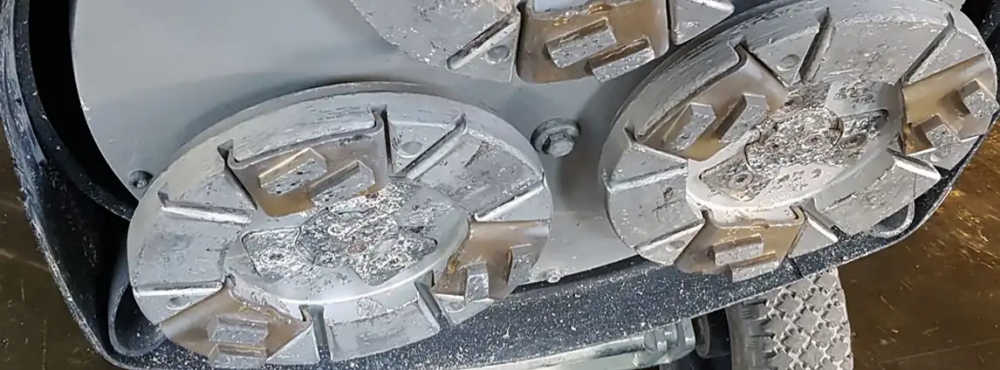
Bond selection should also take the grinding task into account. Coarse diamond grits are commonly used for more aggressive material removal, while finer grits are used as the surface is refined. The bond must work effectively with the chosen grit and segment design, as well as the grinder’s operating characteristics. When evaluating a tool, pay attention to whether it cuts consistently, how quickly the segments wear, and whether the surface shows signs of excessive scratching or glazing. These observations provide more useful guidance than choosing a bond based on a general label alone.
The most reliable way to select the right bond type is to start with the concrete condition, choose a suitable tool, and assess its performance during grinding. DTS DIAMOND offers metal bond diamond tooling, such as SASE metal grinding tooling and Redi Lock diamond tooling, in different bond formulations and segment designs for concrete grinding and surface preparation. When comparing options, consider the floor’s hardness, aggregate abrasiveness, required material removal, and the grinder being used. Matching these factors helps maintain diamond exposure, control tool wear, and achieve more consistent grinding performance.
- Newsletter
- Join our community
- Company Info
- Feedback Customer Reviews About Us Contact Us Blog Help Center
- User Center
- Forget Password My Orders Tracking Order My Account Register
- Payment & Shipping
- Customs & Taxes Locations We Ship To Shipping Methods Payment Methods
- Company Policies
- Return Policy Privacy Policy Terms of Use Infringement Policy