
Why Terrazzo Flooring Works in Different Spaces
Terrazzo flooring is used in a wide range of settings, from private homes and offices to hotels, schools, and public buildings. Its appeal comes from the combination of a durable surface and considerable design flexibility. Made with decorative aggregates such as marble, glass, or other suitable materials embedded in a cementitious or resin-based binder, terrazzo can be customized to suit different architectural styles. This adaptability allows designers to create floors that complement a space without sacrificing everyday functionality.
In residential interiors, terrazzo offers a way to introduce color, texture, and pattern without relying on separate decorative flooring materials. It can work well in living areas, kitchens, hallways, and bathrooms when the selected system is appropriate for the location and installed correctly. Aggregate size, color combinations, and the final finish all influence the appearance of the floor. A subtle design can blend into a minimalist interior, while larger or more contrasting aggregates can create a stronger visual feature.
Commercial spaces place different demands on flooring. Offices, hotels, retail stores, and restaurants often experience regular foot traffic and frequent cleaning, so the floor needs to suit both the design and the daily use of the building. Properly installed terrazzo can provide a durable, continuous surface with relatively few joints compared with many tile layouts. Its long service life can also make it a practical option for buildings where replacing the flooring would disrupt normal operations. Slip resistance, cleaning methods, and the selected finish should still be considered according to the intended use of each area.
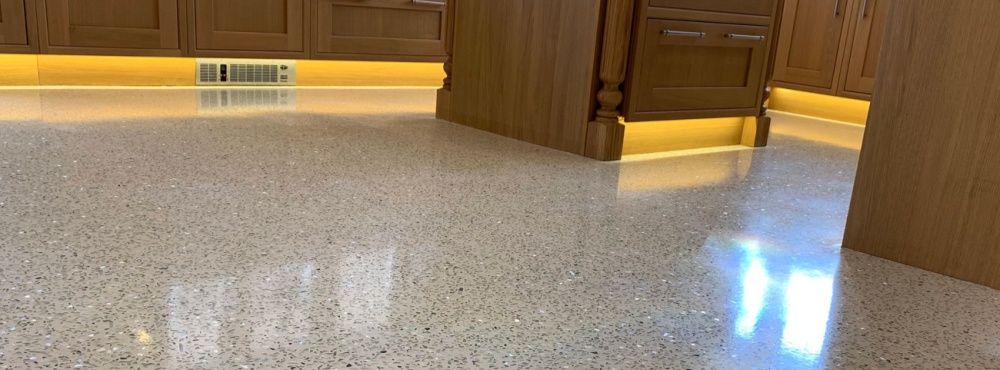
Terrazzo is also suitable for many institutional and public environments, including schools, airports, and healthcare facilities. These spaces often require flooring that can withstand intensive use while maintaining a clean, cohesive appearance. The performance of the finished floor depends on the terrazzo system, installation quality, maintenance routine, and local conditions. Although terrazzo is durable, it is not maintenance-free; suitable cleaning products and prompt attention to damage help preserve its appearance over time.
Another advantage is that existing terrazzo can often be restored rather than replaced when its surface becomes dull, scratched, or worn. Depending on the floor’s condition, contractors may use TransGrind diamond grinding tools adapted for suitable terrazzo applications to address surface irregularities, followed by appropriate refinement and polishing. Metal bond diamond tools may be used during the initial grinding stages, while diamond polishing pads can help refine the surface in later stages. The correct tooling and process depend on the binder, aggregate, depth of damage, and desired finish, since excessive grinding can remove too much material or change the floor’s original appearance.
Terrazzo works across different spaces because it can combine decorative character with long-term practical use. Its success, however, depends on choosing a suitable system for the environment, installing it properly, and maintaining it according to the floor’s needs. For architects, designers, and property owners, considering the expected foot traffic, appearance, cleaning requirements, and potential for future restoration helps determine whether terrazzo is the right flooring choice for a particular project.
- Newsletter
- Join our community
- Company Info
- Feedback Customer Reviews About Us Contact Us Blog Help Center
- User Center
- Forget Password My Orders Tracking Order My Account Register
- Payment & Shipping
- Customs & Taxes Locations We Ship To Shipping Methods Payment Methods
- Company Policies
- Return Policy Privacy Policy Terms of Use Infringement Policy